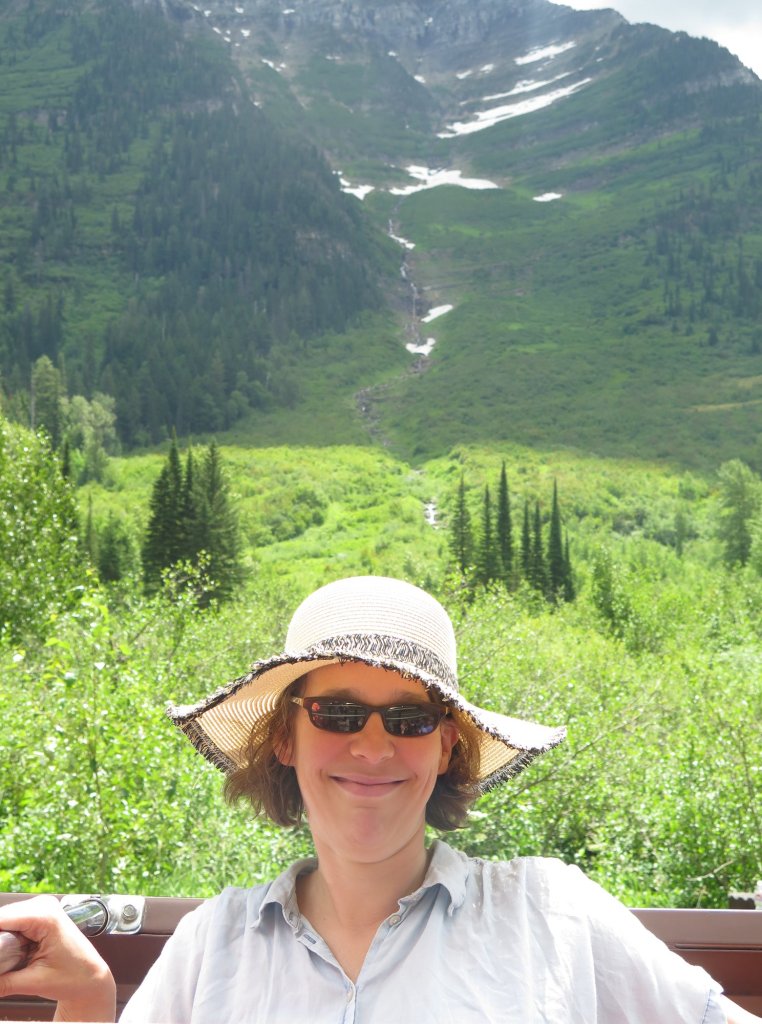
After having spent 71 years never visiting Montana, I managed to make two very different trips to the Big Sky State in the space of two years. In July of 2019 my daughter Megan and I set out from Seattle aboard the Empire Builder, heading for Chicago. Our trip on the Empire Builder was not the traditional 2 days and 2 nights to get across the continent and watch the scenery fly by. The Amtrak travel agent I spoke with was very obliging about customizing our trip and still giving us the benefit of Amtrak special deals and booking arrangements. The “normal” Amtrak package allowed an overnight at Glacier National Park including a room at the historic hotel built in 1912 adjacent to the East Glacier train station and designed to appeal to transcontinental rail travelers from an earlier era. I had tried during previous summers to get a reservation at the hotel. There were never any vacancies and I learned why. Amtrak books huge swaths of rooms for train travelers. Even though we elected to get off the train in Whitefish, a few hours drive from East Glacier, the ticket agent booked us a room at the Glacier Park Lodge and we stayed there for two nights before embarking on a weeklong driving tour of Montana, Alberta, British Columbia, and Idaho. Megan, my daughter and traveling companion on this adventure, appears in the picture below.
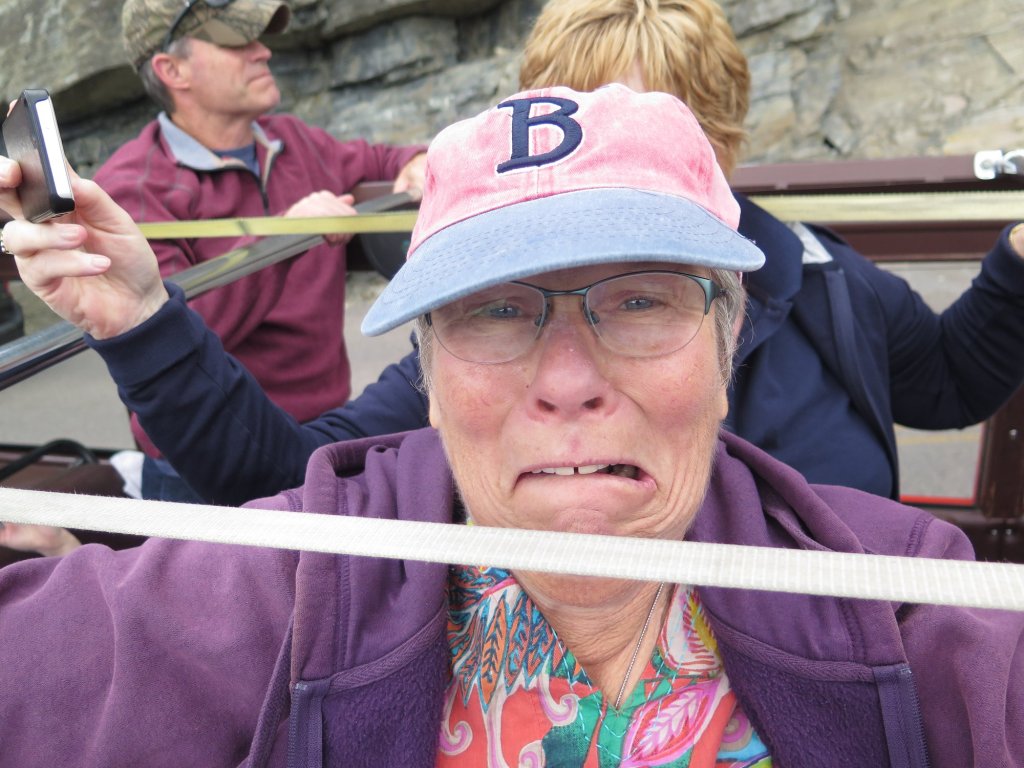
Whitefish, Montana turned out to be an inspired choice of a place to get off and back on the train. I have Megan to thank for that decision. She studied the map and the car rental situation and determined that we could rent a car for half the cost in Whitefish compared to getting off the train at Glacier National Park and renting a car there. Plus it gave us an opportunity to explore Whitefish when we arrived and when we returned from our week on the road in the rental car. Whitefish is one of those towns where you just know you would like to go back and spend more time. The train station itself was a piece of history and the town held many lovely shops and restaurants. The rental car guy, who operated out of an old fashioned service station on the outskirts of town, picked us up at the train station and gave us a brief tour of the town and an explanation of how to get out of the town heading toward Glacier National Park. He also gave us a sage piece of advice. He observed that I had brought my GPS with me and was in the process of plugging it into the rental car. He told me not to listen to that thing. He said people would leave Whitefish, listen to the GPS instructions, and wind up on deserted logging roads in the mountains. He advised us to follow his instructions to get over the mountains and safely to our hotel in East Glacier. His instructions required us to enter the Park and drive the Going to the Sun Road as the only dependable way to get over the mountains. It was longer and slower, but infinitely more dependable than listening to the GPS. As luck would have it, I was behind the wheel when we reached the point where we entered the Park. My introduction to Glacier involved a white knuckle trip on that road. Megan assured me the scenery was beautiful, but I did not dare to look to the right or left. I kept my eyes on the road, prayed we would not meet any other vehicles, and tried not to look over the edge. Fortunately, after a few hours we got through the Pass and drove down into East Glacier. Luckily for me our Amtrak package included a guided tour in a vintage 1930’s touring bus through the entire Park, including another chance to experience Going to the Sun Road, this time as a passenger. The picture below is of me in the touring bus with the roof down, and I am still scared to death, only as a passenger not the driver!
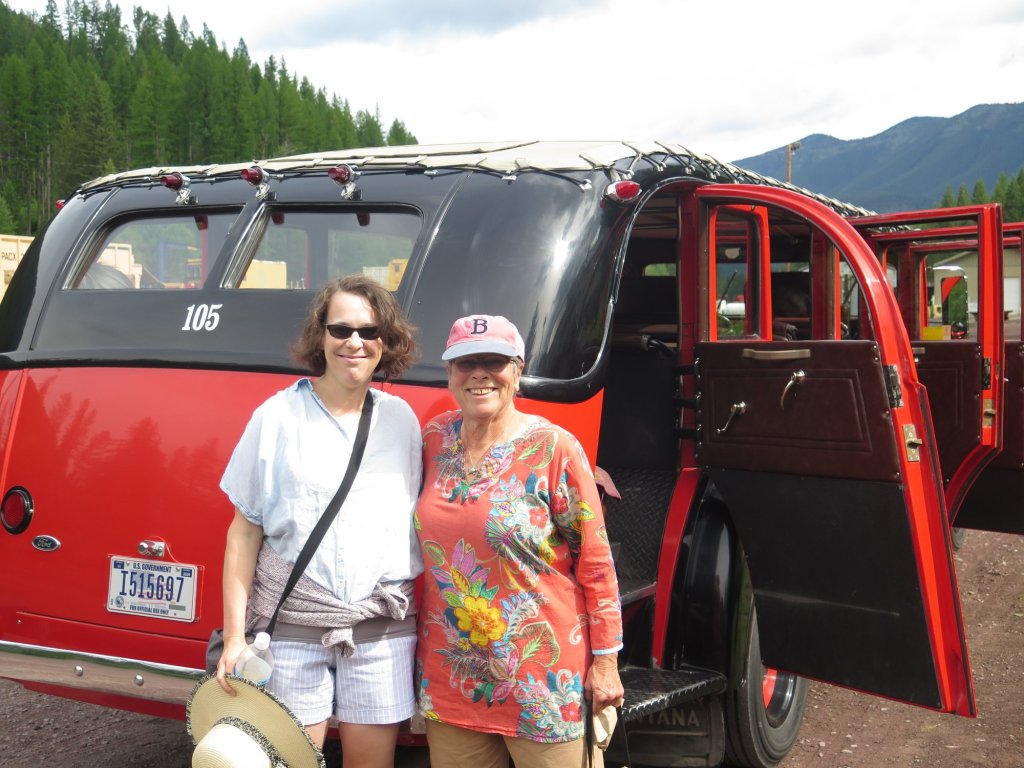
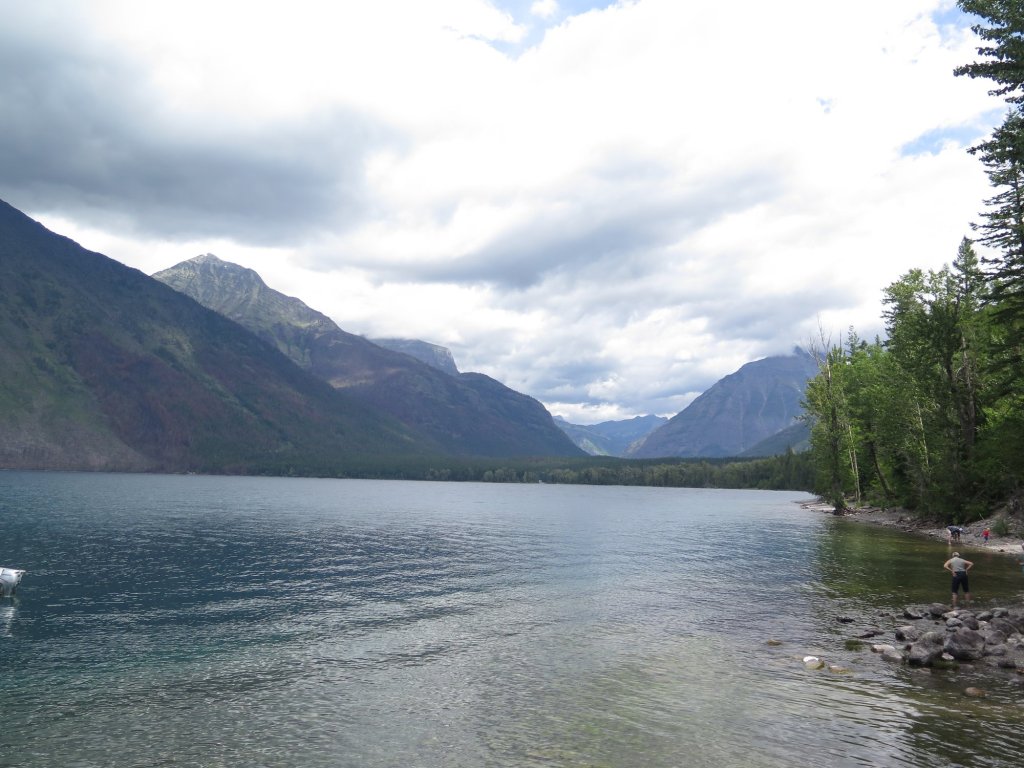
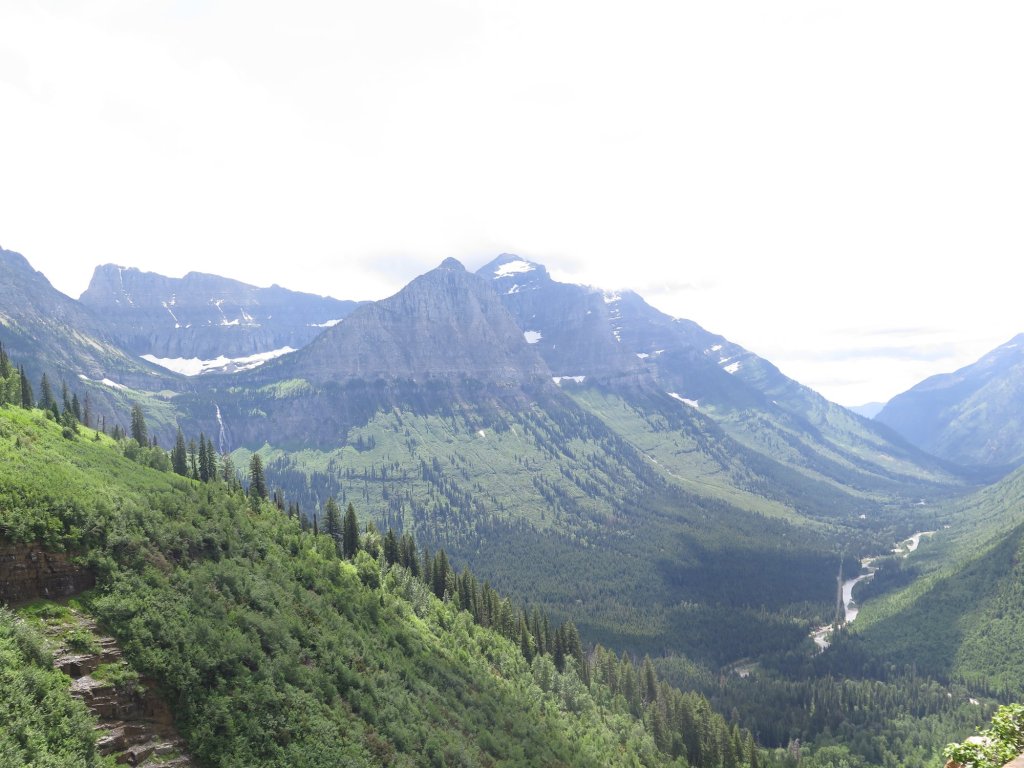
Glacier National Park remains my favorite national park of all the parks I have visited. The hotel is spectacular. The lobby contains gigantic lodge pine beams and supports, the rooms are clean with gorgeous views into the mountains, and the lobby and common space contain comfortable rockers and chairs for reading and admiring the surroundings. https://www.nps.gov/glac/index.htm/index.htm You can read all about the Park, but no amount of reading prepares you for the grandeur of the actual place. Glacier is called the Crown of Continent for good reason. Whether you arrive by train or private vehicle it is imperative that you take the guided tour in the vintage red buses. Our tour guide was both a naturalist and historian. Although it was long day, in excess of eight hours on the road, the tour was worth every cent. We had lunch at a lodge on a lake in the park. We stopped a number of times to rest, put the roof up or down, depending on weather, and generally just enjoy the park. Seating is four abreast in the tour bus and our seatmates were a delightful couple on holiday from Scotland. They were taking the Amtrak and were on the same tour package as we were, but they were leaving the next day to head east toward North Dakota whereas we were heading north in the rental car bound for Alberta and British Columbia on our customized detour. Since the scope of this blog is limited to my time visiting the 50 states, I can’t bore you with the details of Lake Louise, Banff, hot springs in the Columbia River Valley of British Columbia, or even Waterton National Park, which adjoins Glacier National Park after you cross the border into Canada. You will hear about Idaho in the next post. I can, however, recommend that trip to anyone who will listen. Some pictures of the vintage convertible touring bus and the scenery of Glacier appear below.
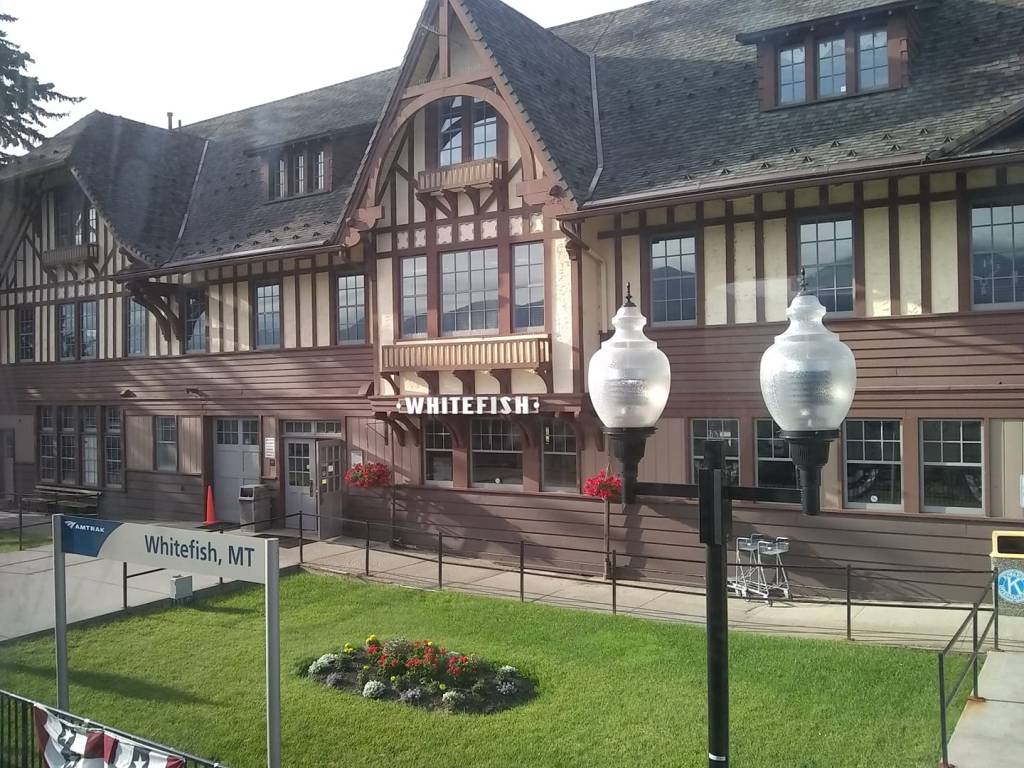
Eventually, after spending a week exploring Glacier National Park, Alberta, British Columbia and Idaho, we made our way back to Whitefish and turned the car back over to the nice rental man. We checked into our hotel in Whitefish to spend the night because the Amtrak train from Seattle would be coming through town at 7:00 a.m. the next morning and we had to be on it. https://firebrandhotel.com/ The Firebrand turned out to be an excellent accomodation. It was within walking distance of shops, restaurants, and even the train station. We had a great evening in Whitefish, bringing our Montana sojourn to a close. Little did we realize the next morning when we boarded the train that we would not be actually saying good-bye to Montana for quite a while. Whitefish is in the extreme western part of the state. We did not arrive at our destination in Minot, North Dakota until 11 p.m. that night. The train trip across Montana was interminable. Unfortunately once we got out of the mountains the pleasant train ride was over, and the Great Plains were just not so great. Of course, there were no huge herds of roaming bison. They are long gone. Nor did any wild west train robbers or marauding bands of native people appear on the horizon. There was nothing to break the monotony except the occasional gas or oil well with flames burning out of a hole in the ground. A bit unsettling, truth be told. Plus we learned that passenger trains get delayed all the time because freight trains have priority. We spent huge chunks of time pulled off on sidings waiting for other trains to go by us. Our 11 p.m. arrival in Minot was about five hours behind schedule, but no one seemed very upset by that except for Megan and me. Some pictures of the train station and Whitefish are below.
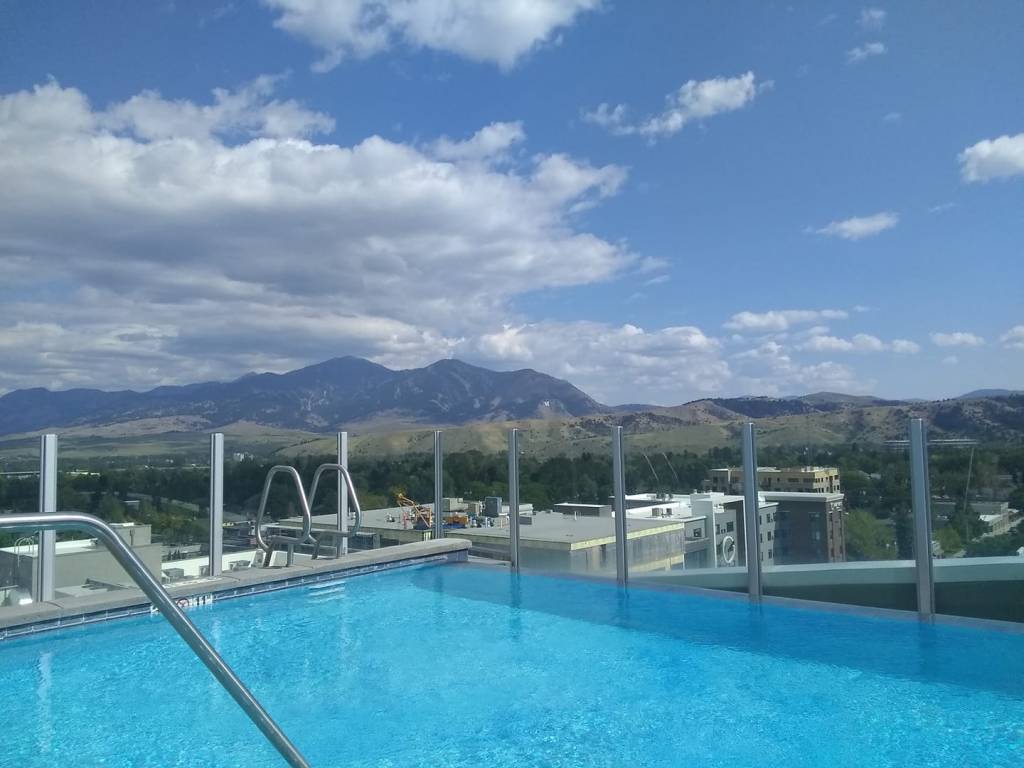
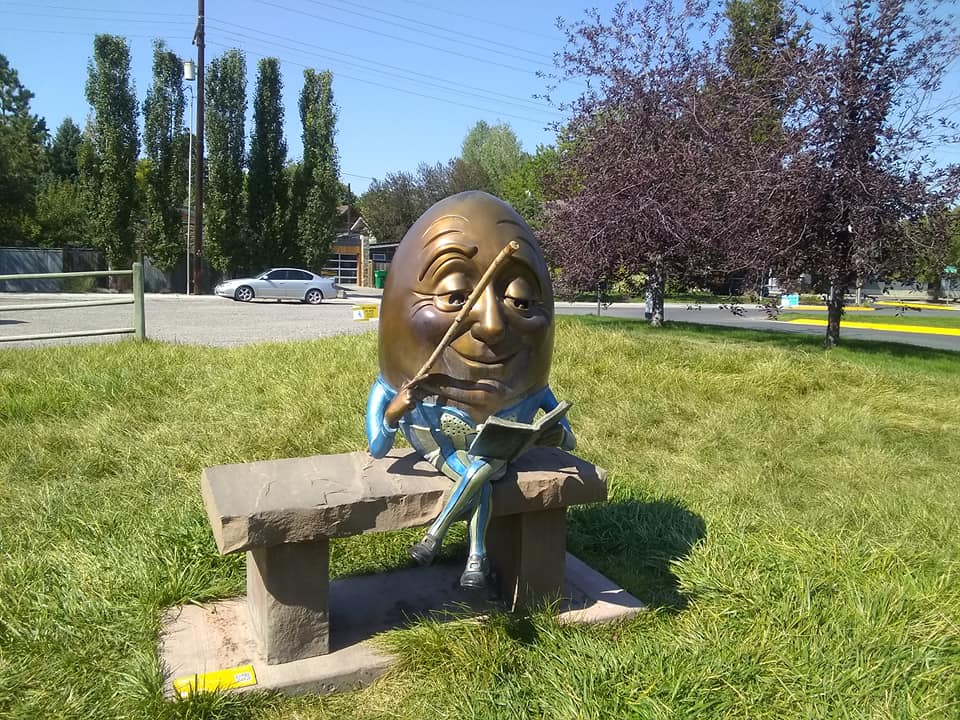
I did not realize at the time, but two years later, in September of 2021, I was destined to return to Montana. That trip was a solo trip on my part as I was booked on a Natural Habitat tour of Yellowstone and Grand Teton National Parks. This trip was my first post-pandemic air travel and my first real foray into the world of solo travel in an organized tour group. As you will discover when I finally reach Wyoming, I enjoyed the trip in spite of my pandemic misgivings and the fact that I had not travelled at all in 2020. This particular tour began in Bozeman, Montana. https://www.nathab.com/us-national-parks-tours/yellowstone-safari/itinerary/hidden-yellowstone-itinerary-2021/ I arrived a day prior to departure and so I had time to explore the city by myself. I found Bozeman to be a very walkable city with good restaurants, interesting shops and a truly lovely sculpture park with bike and walking trails. I also found the drive along the Yellowstone River from Bozeman to the northern entrance to Yellowstone to be a beautiful ride. The Robert Redford movie, “A River Runs Through It” was filmed on the Yellowstone River. When we first entered the Park we traveled across the Lamar Valley to Cooke CIty, Montana, a place everyone should visit at least once in their lives. We spent two nights in Cooke CIty at the finest accomodation the “city” had to offer, a Super 8 Motel. Cooke City is a mountain hamlet, most famous for being the gateway to the Beartooth Highway, a stunning road that climbs to an elevation of 10,947 feet and is sometimes called “America’s most spectacular drive.” I have seen pictures. It is not for me, but it is Cooke City’s claim to fame. Cooke CIty is also only 3 miles from Yellowstone Park’s northeastern entrance which leads directly into the Lamar Valley. It is one of the least visited areas in Yellowstone and where you are most likely to see wolves. I have some pictures of Bozeman below, including the rooftop pool of the hotel where I stayed and Humpty Dumpty in the sculpture park. They help to give you a sense of the place.
Montana is definitely a state worth visiting. Montana is a word derived from the Spanish word meaning “mountainous.” The western portion of the state is dominated by the beautiful Rocky Mountains, but when traveling east across Montana you quickly became aware that when you leave the mountains behind you, Montana is not mountainous at all. According to Britannica 3/5, more than 1/2, of Montana is in the Great Plains. And the area is vast, level, or at least gently rolling, and sparsely populated. Only three states are larger, Alaska, Texas and California. Only two states, Alaska and Wyoming, have a lower population density. There truly is a lot of sky to see, hence the nickname “Big Sky Country.”
 Memories - A Second Chance at Happiness