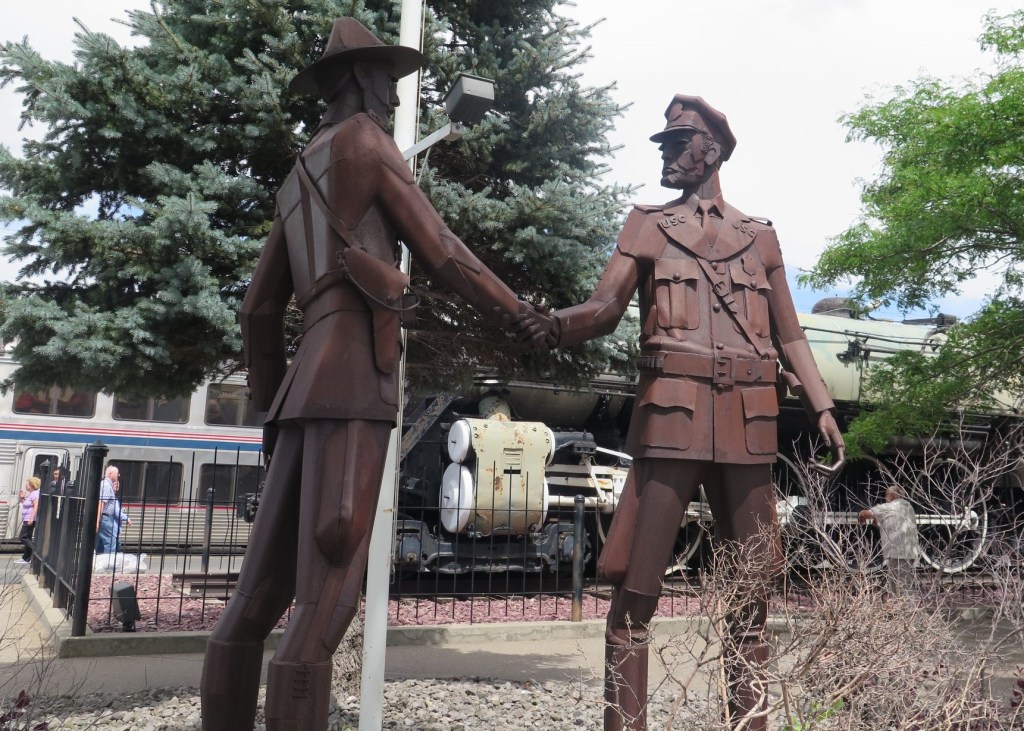
The sculpture pictured above is not actually in North Dakota. It is located in Havre, Montana, a whistle stop located in eastern Montana about 40 miles south of the Canadian border on the Empire Builder’s route across the continent. My traveling companion obviously jumped off the train and took this symbolic picture of the Mountie shaking hands with the Border Patrol Agent. I found the picture in her North Dakota album of pictures so she apparently thought she was in North Dakota at the time (you may remember I mentioned in a prior post about how interminably long the trip across eastern Montana had been). I thought the symbolism was an appropriate place to begin the next leg of our trip, the one week detour through North and South Dakota, commencing in Minot, North Dakota. When Megan and I arrived in North Dakota and checked into our motel we were tired, depressed, and not at all impressed with Minot. Minot, unlike Whitefish, is the kind of town you know you never want to visit again, but yet we were destined to return the following week to drop off the car and get back on the train after visiting North and South Dakota. Minot was the only thing in North Dakota that I did not like. I love the state and think it is a great place to visit. I see why the 50 staters sometimes visit it last with the motto “Save the best for last.” (See my earlier West Virginia post for a fuller explanation.) Minot, however, is a dismal town with little to recommend it except its proximity to Theordore Roosevelt National Park and the fact that it is very close to the “Heart of the World” (more on the meaning of that term later). First thing the next morning we grabbed the rental car and headed south out of town as fast as we could go.
Theodore Roosevelt National Park is my opinion an underutilized and under appreciated national park. https://www.nps.gov/thro/planyourvisit/placestogo.htm The park is divided into three separate and distinct units and it covers a lot of geography. We spent our time in the South Unit near Medora. Teddy’s ranch is located in a more northerly unit and we did not visit there. Roosevelt spent approximately fourteen years off and on ranching and hunting in the rugged North Dakota Badlands between 1889 and 1903 following the tragic deaths of his first wife and his mother. Roosevelt said he would never have become president if it had not been for his experiences in North Dakota. That time ignited his love of the west and his desire to preserve the wilderness and devote himself to land conservation. It was not until 1947 that the national park was created by Harry Truman as a memorial to Roosevelt.
Our tour of the South Unit was centered in Medora, a “cute” old-fashioned western town best known for the show they perform during summer evenings in the outdoor amphitheater just outside town. https://medora.com/MedoraMusical/ It was a hokey production, but we would not have missed the show for the world. The park itself was really the major attraction, but the show made our evening’s entertainment that much better. While driving through the park we saw bison, herds of wild horses, and prairie dogs. Megan fell in love with the little rodents. She was greatly distressed when she learned during a later stop at a Lewis & Clark Museum in Sioux City, Iowa, that they had captured one and shipped it east to Thomas Jefferson at the White House. I discussed the prairie dog incident more fully in the Iowa post. Although we did visit the northwestern corner of Iowa on the road trip through the Dakotas, I first wrote about Iowa chronologically at an earlier point in time during a 2014 road trip to Nebraska. You can go back to that post if you want to learn the full sad tale of the prairie dog and Thomas Jefferson. The pictures below show the beauty of the rugged North Dakota Badlands, the wildlife in the park, and a scene from the Medora show.
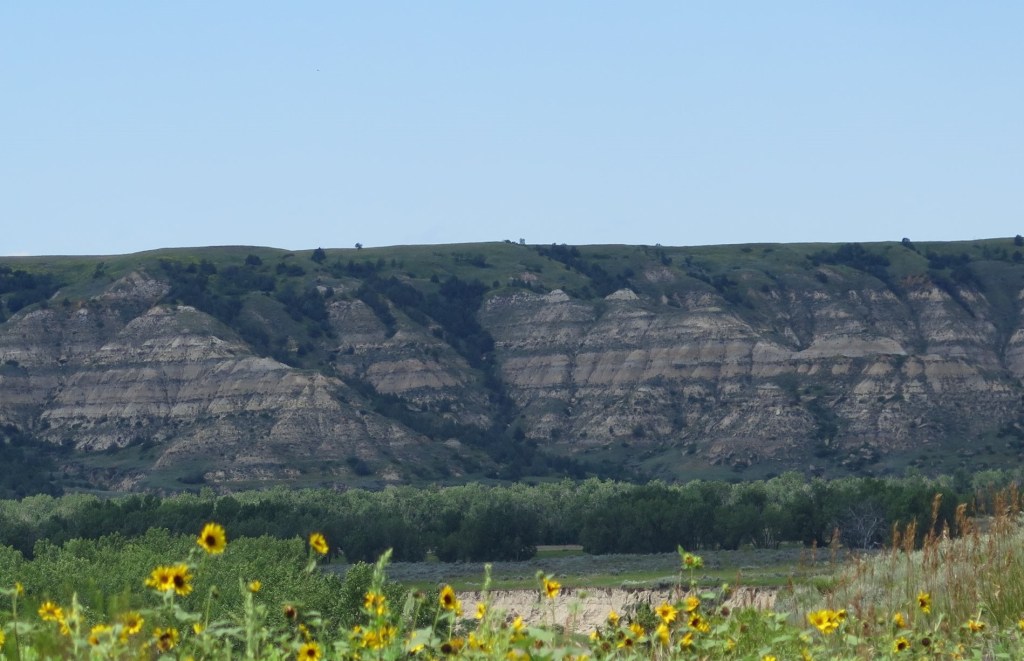

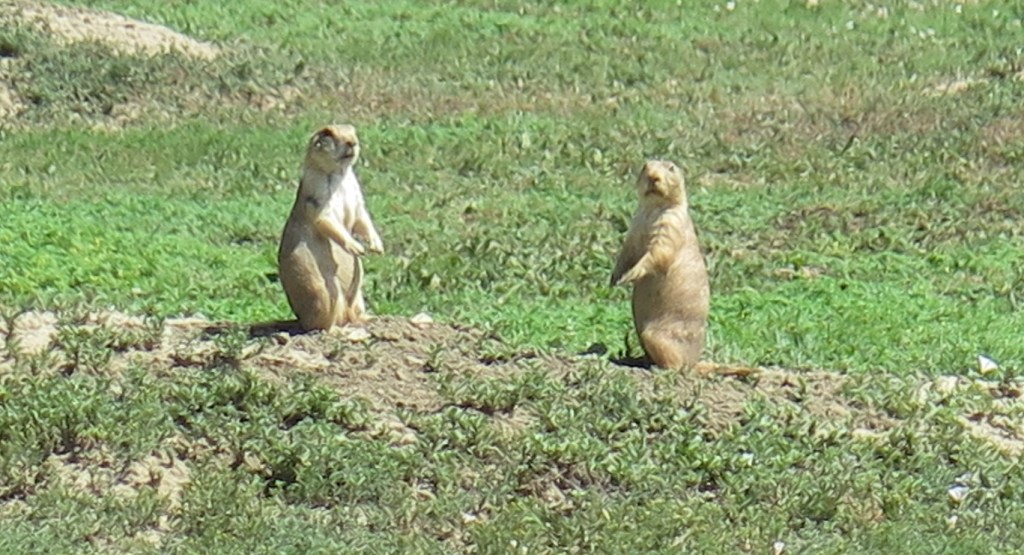
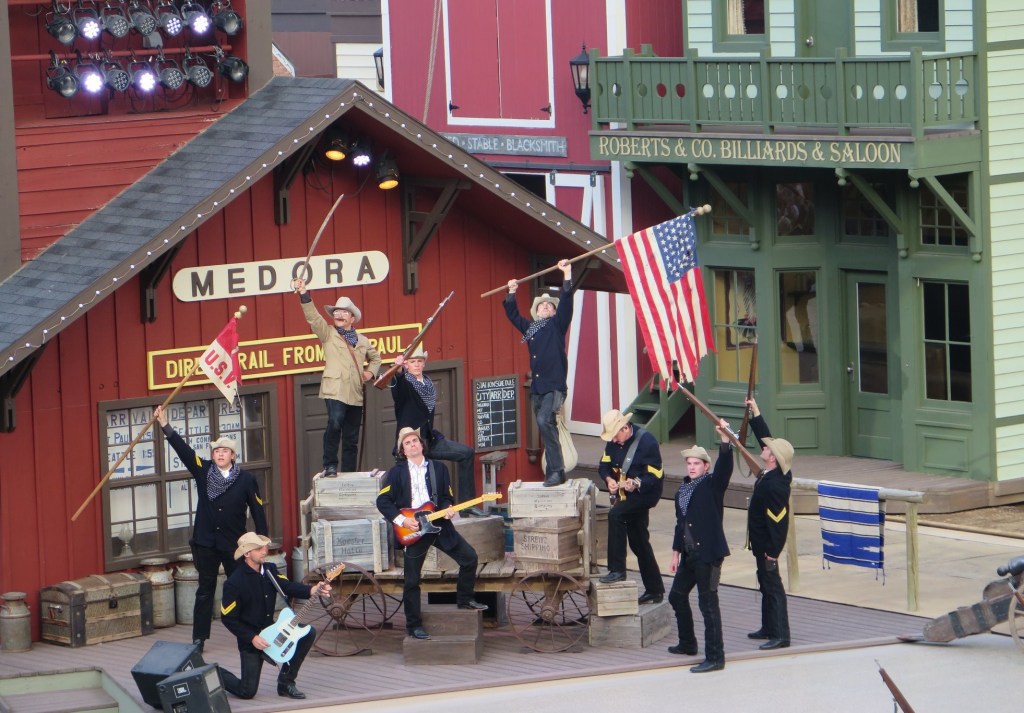
After we left the national park we proceeded south into the western part of South Dakota where we spent a couple of days touring that state. When we reached the eastern part of South Dakota we turned north heading toward Fargo on our way back to Minot. Fargo was in large measure the destination city for my North Dakota trip because my friend Karen lives in Fargo. She and I worked together for the federal government for fifteen years and often saw each other at national conferences and trainings. Since the work we did involved some cross border experiences we both had a healthy respect for Canadians and incidents that arose along our northern border, which as you know stretches from Maine to Washington. It turns out that Maine and North Dakota, both being rural and sparsely populated along the border, have a lot in common when it comes to border activities with the Canadians. I chose the photo of the mountie and border patrol agent to introduce this state because it brings back good memories of Karen’s and my experiences.
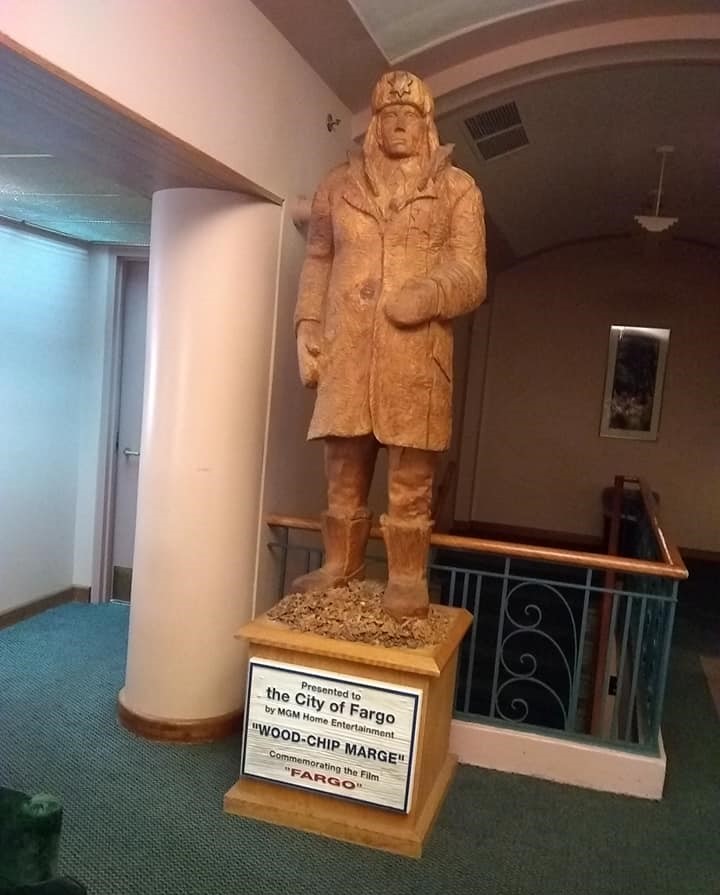
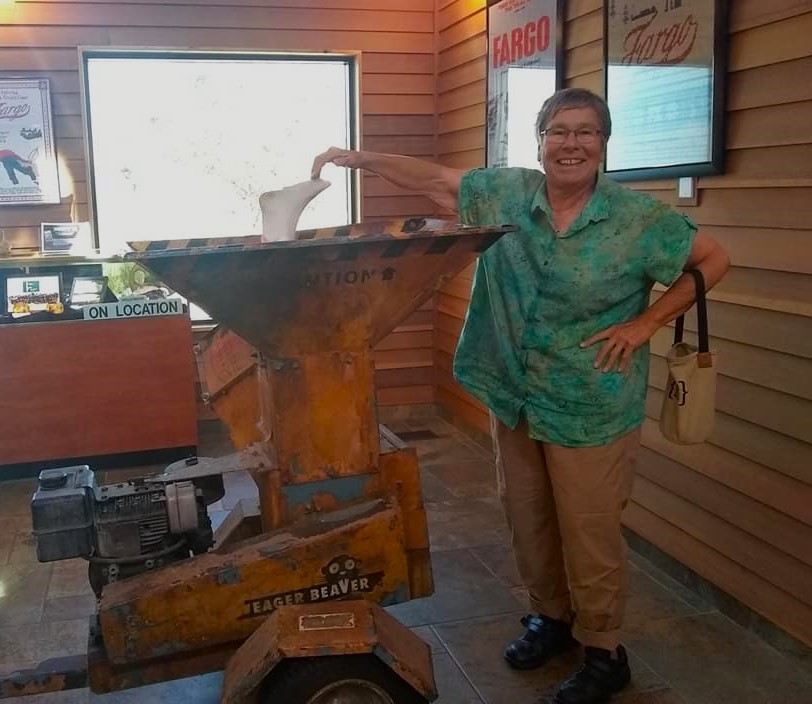
Fargo turned out to be a great stop. Karen and her friend met us in a nice restaurant. At Karen’s insistence I ordered the walleye pike for dinner. I told Karen I did not normally like freshwater fish, but she insisted I order it. It was delicious. I have become a fan of walleye, although it is rarely on the menu at the restaurants I frequent. When I return to the upper Midwest I will indulge again. My daughter had a separate agenda for Fargo. She wanted to find the infamous woodchipper featured as the murder weapon in the eponymous movie named Fargo. https://www.youtube.com/watch?v=ju75Sd4yAZw We asked Karen and she had no idea where the woodchipper was displayed but she did know that the local movie theater housed a wooden sculpture of Wood-chip Marge from the movie, so we trudged to the theater to take a picture of Marge. (Very friendly in Fargo, they let us in for free just to take the picture). But Megan was not satisfied. She wanted to find the woodchipper itself which had been used in the movie. After reviewing a copious number of brochures, internet searches, and tour books, Megan came to believe we would find the woodchipper at the tourist bureau on the way out of town the next morning. Sure enough there it was and our stay in Fargo was complete. It was time to move on, back to Minot.
We turned left upon leaving Fargo and headed west. We had a few hours drive ahead of us, but we were in no hurry to get back to Minot. The train was supposed to be in town just after dinner and we did not know if it would be delayed like it was when we arrived a week earlier so we had to be there on time, but we did not want to get to Minot too early. We made good time on the drive from Fargo to Bismarck although we experienced the closest thing to a tragedy on the entire trip during that leg of the journey. We almost ran out of gas. Karen’s friend had told us it was the most boring stretch of road we would ever drive and that the most exciting thing would be when we reached a curve in the long straight interstate highway at about mile 90. He was right, but what he neglected to mention was that there are very few exits between Fargo and Bismarck and when we did come upon one it had no services. The GPS told us the nearest services would be 40 miles away, resulting in an 80 mile detour. We pushed on til we were running on fumes and every indicator light on the dashboard was flashing. At just that moment the exit for Bismarck appeared and we coasted into a huge multi-pump gas station. We gassed up and turned north heading for Minot, but with time to kill we decided to explore one more North Dakota site before we reached Minot.
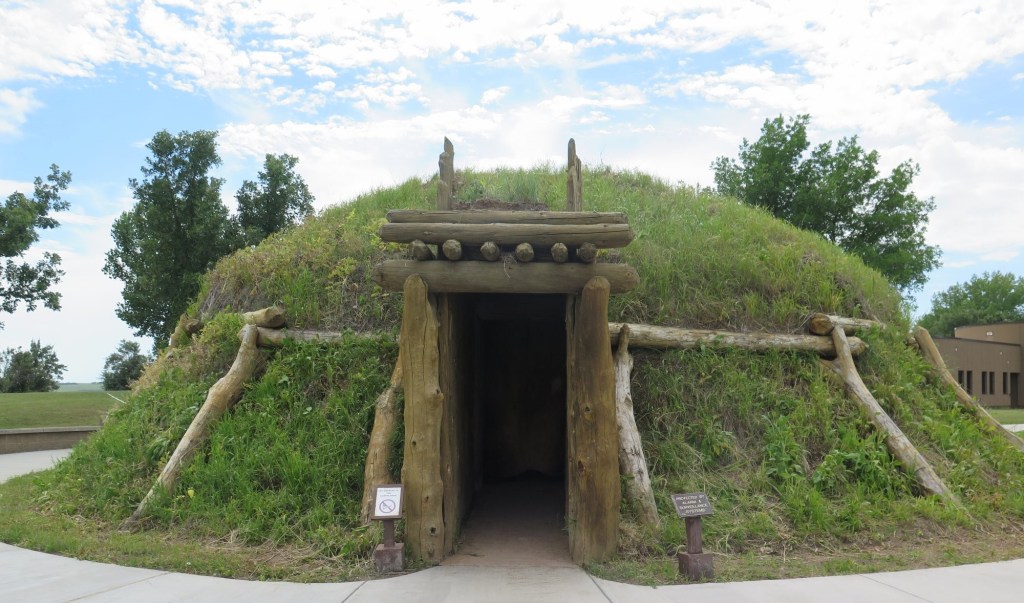
Before this trip Karen had given me a present. It was a book called “Encounters at the Heart of the World: A History of the Mandan People.” https://www.goodreads.com/book/show/22237181-encounters-at-the-heart-of-the-world Karen said if I was really planning a visit to North Dakota I had to read this Pulitzer Prize winning book to understand how the Mandan people had been the heart of North America before the arrival of Europeans on the continent. All tribes traded with and respected the Mandan tribe which settled mainly along the Heart River. They were superb traders and had great influence on the lives of all tribes. Unfortunately, their trading prowess eventually led to their almost complete extinction because the European blankets they received in the 1820’s were infected with smallpox leading to many deaths and the tribe’s rapid decline. Most of white history of the Mandan People comes from Lewis and Clark because the expedition spent the winter of 1803-04 with the tribe. The few remaining Mandan People ultimately merged with the Hidatsa and another tribe and that nation has survived into the modern era. As Megan was driving along and I was explaining this history to her, an amazing bit of travel serendipity occurred. I explained that the Hidatsa and other plains tribes lived in sod houses and Megan could not believe it was possible to construct a house of sod. As I leafed through pamphlets and books in the car trying to find a picture of a sod house, I noticed on the map that a place called Knife River Villages was located just off our route of travel. https://www.nps.gov/knri/index.htm This is a well-preserved archaeological site that tells the story of the Hidatsa and Mandan peoples. Avoiding an early arrival in Minot, we made a detour and visited the historic site. It was well worth the trip and Megan got to see a reconstructed sod house and became a believer. Anyone who visits North Dakota and writes the place off as the spot where Teddy Roosevelt once had a ranch, misses an important piece of the history of North America. Thank you, Karen, for giving me the book which I will always treasure and thank you to the Mandan People for the contributions they have made to this continent.
We arrived in Minot well before the train. We had dinner at a Texas Longhorn restaurant like the one we have in Bangor, Maine. There weren’t a lot choices. After eating we returned the car and took a taxi to the train station. The train arrived around 8:00 pm and we got aboard and headed east. We stopped in Minneapolis, but I have nothing to report because I was sound asleep. Minnesota remains a great mystery to me and it will be my 50th state when and if I finally get there. But in the meantime for purposes of this blog the train journey tour is not over because next I have to double back to South Dakota, state number 45.
 Memories - A Second Chance at Happiness